Sign in. It’s quick, free and it’s up to you.
An account is an optional way to support the work we do. Find out more.
Sign in. It’s quick, free and it’s up to you.
An account is an optional way to support the work we do. Find out more.
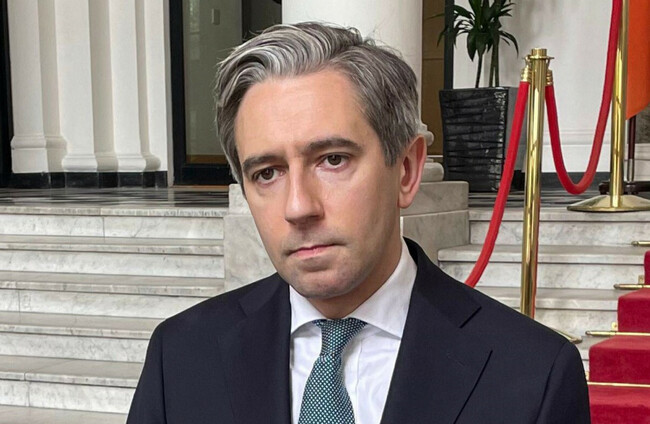
TÁNAISTE SIMON HARRIS has said that he would rather see further increases in public pension and other social welfare payments than the jobseekers’ allowance in Budget 2026.
Harris was asked in Dublin this afternoon if he was in favour of separating the dole from universal increases to social welfare payments in the upcoming budget.
While seeking to refrain from discussing budgetary matters before negotiations, the Tánaiste said he was in favour.
“I do always think there is merit in not looking at social welfare payments with uniformity across the board.”
Harris said that he would “keep an open mind” about separating the jobseekers’ allowance from future increases in social welfare payments.
He added: “I’m not convinced that you need to see as significant a rise in the dole as you do in the pension, for example, at the time where our country is at full employment, when there is lots of supports out there for people getting into work.
“When there are other supports out there for very many people who can’t work for very many good reasons. That’s my opinion. We’ll thrash it out all that out at the time of budget.”
Addressing recent debate around the earmarked increase in student college fees next year, Harris claimed that “roughly €1.20 to €1.25 on every social welfare payment” is equivalent to government seeking to continue a €1,000 reduction.
“Budgets are all about choices,” the Fine Gael leader said. “They’re all about balance, and there’s only so much money in the pot.”
Harris is not alone in this opinion within his party. Fine Gael’s Offaly TD John Clendennen recently told local station Midlands 103 that he is opposed to increasing the dole at the same rate as pensions or disability allowances.
Earmarked increases in college fees took centre stage for a second day during Leaders’ Questions in the Dáil earlier today. Public expenditure minister Jack Chambers did not provide clarity on the decision, despite being asked repeatedly in the chamber.
Harris, a former higher education minister, claimed today that the only reason he didn’t reduce fees on a permanent basis during his term was because there were only enough funds to introduce temporary measures.
According to Social Democrats’ deputy leader Cian O’Callaghan, families have been budgeting for reductions because the commitment to cut and abolish fees was included in the Programme for Government and election manifestos.
Sinn Féin leader Mary Lou McDonald said that parents and students need to know what they will be paying as a contribution fee at third-level facilities in the new term.
Chambers largely repeated what he said yesterday, telling the TDs that the engagement around the issue remains ongoing and that higher education minister James Lawless will work to introduce more permanent reductions in the long-term.
The government is endeavouring to avoid permanent public expenditure being dependent on temporary corporate tax revenue, the Taoiseach Micheál Martin said today.
While there are significant uncertainties around what might transpire with US tariffs, Martin said it was important not to “build up expenditure levels that are not sustainable”.
With reporting by Christina Finn in Japan.

To embed this post, copy the code below on your site














have your say